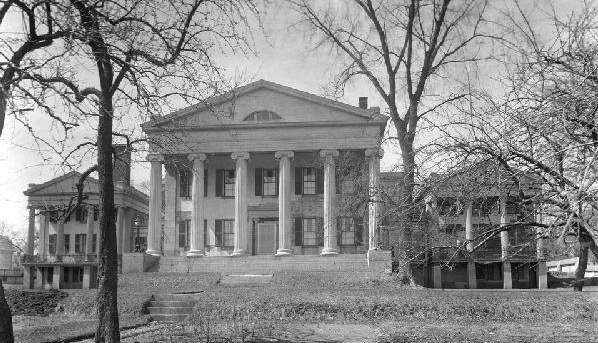
John Avery Parker Mansion, one of the grand houses built with whaling money in 19th century New Bedford.
It is difficult for those of us alive today to understand the size and vast power of the whaling industry in 19th century America. We imagine it like a large scale fishing operation, generating good livelihoods but not necessarily fortunes. However, nothing can be further from the truth. The closest comparison to the New England whaling industry in the middle of the 19th century is, perhaps, the great oil boom taking place today in North Dakota. Chapter 6 reveals much about both the wealth the whaling industry generates in the towns that depend on it, and the type of people coming in to, with luck, take a piece of that whale money home for themselves.
The chapter opens with a description of the crowds that fill New Bedford’s streets. Not just American sailors, but men from around the world, including “savages outright; many of whom yet carry on their bones unholy flesh.” But even stranger are the farmers and shopkeepers who’ve come to try their hand at whaling. “Green Vermonters and NEw Hampshiremen, all athirst for gain and glory in the fishery.” Yet these newcomers are all too likely to “burst their straps in the first howling gale”.
Yet beyond the crowds there are the great stately mansions that the whale fishery has funded. “A land of oil, true enough … a land, also, of corn and wine.” The whale fishery has transformed this isolated coast of New England into one of the richest places in the country:
In New Bedford, fathers, they say, give whales to their daughters for dowers, and portion off their nieces with a few porpoises a piece. You must go to New Bedford to see a brilliant wedding; for, they say, they have reservoirs of oil in every house, and every night recklessly burn their lengths in spermaceti candles.
Whale oil provided light in the cities of 19th century America, and didn’t power every aspect of civilization as petroleum does today. But imagine how much more light was worth in a world that otherwise relied on campfires and tallow candles, a world where lighting the house all night would be considered recklessly extravagant. It’s easy to see why so much money could be made, not just by the owners and captains of ships but by the crews as well.
Pay in the whaling world was based on a share of the final profits of a voyage. As we’ll see later when Ishmael and Queequeg take ship, a new sailor is promised a “lay”, or a fraction of the final profits. A captain could expect as much as 1/8 of the profits, while new sailors as little as 1/300. But a profitable voyage could provide good money to everyone involved, not to mention several years worth of free food and lodging, to anyone who wished to endure the hardships and life-threatening risks of a whale voyage. For many New Bedford men died in pursuit of the whales that provided their livelihood, as we shall see in the next chapter.
 Devouring a Whale